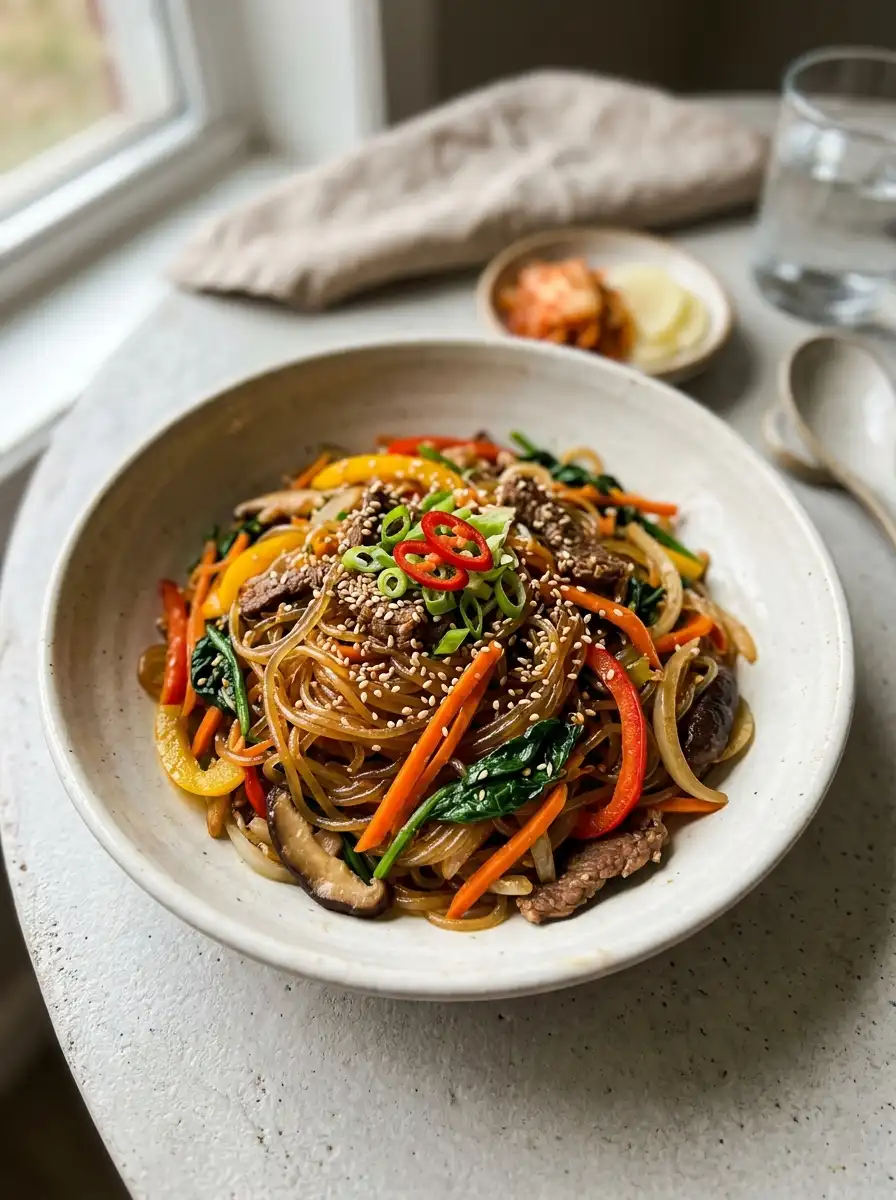
Japchae Korean Glass Noodles Stir-Fry (Sweet, Savory & Chewy Perfection)
Introduction
When I make Japchae, it always feels like I’m cooking something way more complicated than it actually is. It looks fancy, tastes like something from a Korean restaurant, but it’s honestly very doable at home.
I usually make this when I want something lighter than heavy noodles but still satisfying. Those glossy, chewy glass noodles soak up all the sauce, and every bite has a mix of veggies and that slightly sweet, nutty flavor.
I’ve tried this a few different ways over time—more sauce, less sauce, extra veggies—and what surprised me is how forgiving it is. You can tweak a lot without ruining it.
It’s not the quickest recipe because of the prep, but once you get into the rhythm, it becomes almost relaxing. And the result? Totally worth it.
Why This Recipe Works
The balance of soy sauce, sugar, and sesame oil creates that signature savory-sweet flavor.
The noodles stay chewy while the vegetables add freshness and crunch.
Cooking components separately keeps everything from getting soggy.
It’s flexible enough to adjust based on what you have at home.
Japchae Korean Glass Noodle Stir-Fry
Cooking Advice
When I make this, I always cook each vegetable separately—even though it feels like extra work. I’ve tried tossing everything into one pan before, and it turned into a watery mess.
The noodles should be chewy, not soft. Overcooking them is one mistake I made early on, and it really changes the texture.
I like my Japchae slightly on the saucy side, so I sometimes add a tiny splash more soy sauce at the end. Could be just me, but I love it a bit glossy.
If you want to switch things up, mushrooms or tofu work great instead of meat, and honestly, I often prefer it that way.
Ingredients Needed
For the noodles
- 8 oz Korean sweet potato glass noodles (dangmyeon) – the star of the dish
- 1 tbsp sesame oil – prevents sticking + adds aroma
- 1 tsp soy sauce – light seasoning
For the vegetables
- 1 small onion (thinly sliced) – adds sweetness
- 1 carrot (julienned) – for crunch and color
- 1 red bell pepper (sliced) – slightly sweet and fresh
- 2 cups spinach – wilts down nicely
- 1 cup mushrooms (shiitake or oyster) – deep, savory flavor
- 2 green onions (chopped) – fresh finish
For the sauce
- 3 tbsp soy sauce – main flavor base
- 2 tbsp sugar – balances everything
- 1 tbsp sesame oil – nutty richness
- 1 tsp garlic (minced) – essential
- 1 tsp rice vinegar (optional) – slight tang
- 1/2 tsp black pepper
Optional toppings
- Egg strips (thin omelet slices) – traditional touch
- Sesame seeds – for texture
- Extra green onions
Step-by-Step Instructions
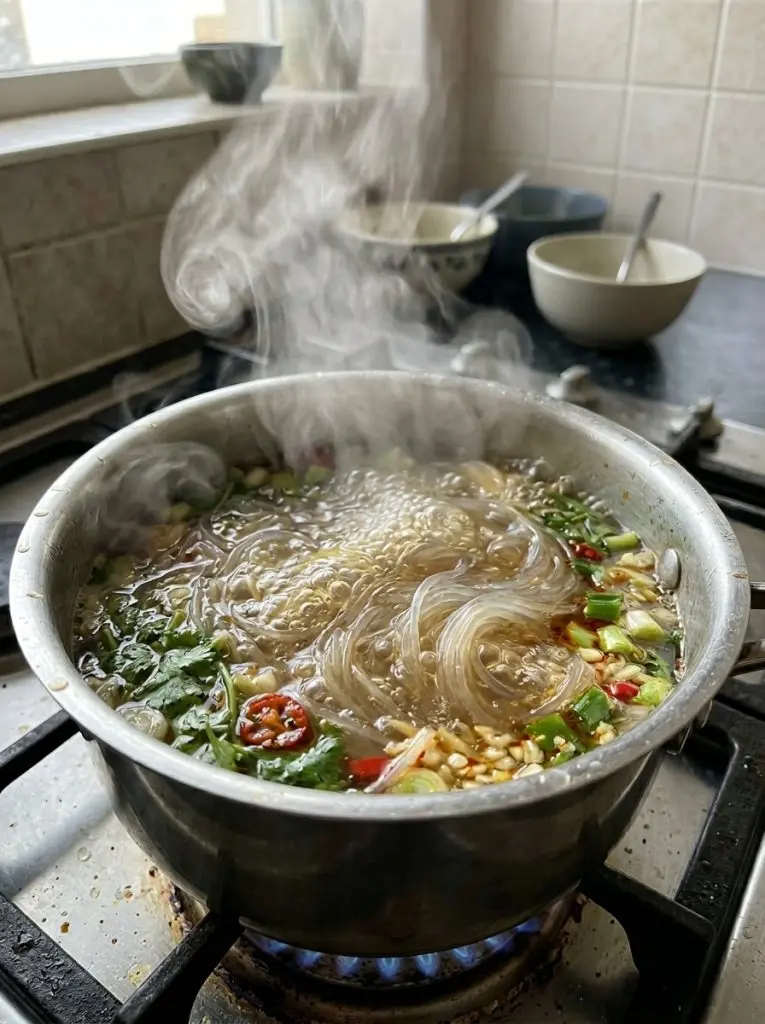
Step 1: Cook the Glass Noodles
Boil the noodles for about 6–7 minutes until chewy. Drain, rinse in cold water, then toss with sesame oil and a little soy sauce.
I usually cut them with scissors—it makes eating way easier.
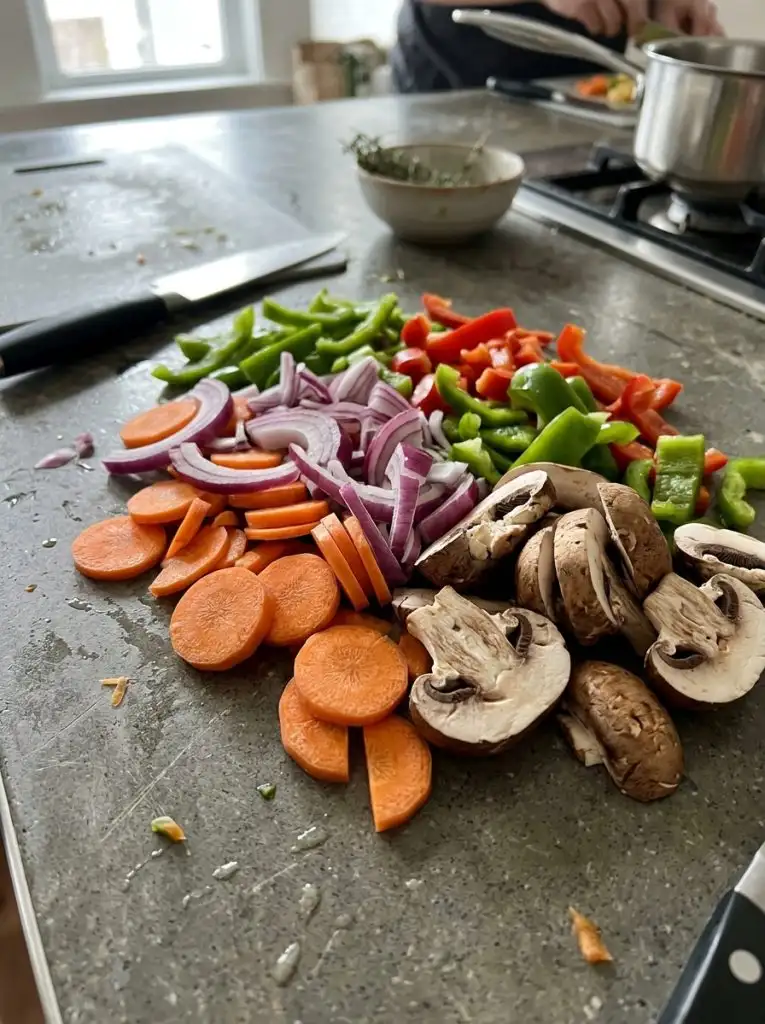
Step 2: Prep and Slice Vegetables
Slice all your vegetables thinly so they cook quickly and evenly.
This step can feel a bit tedious if you rush it—I’ve definitely regretted uneven cuts before.
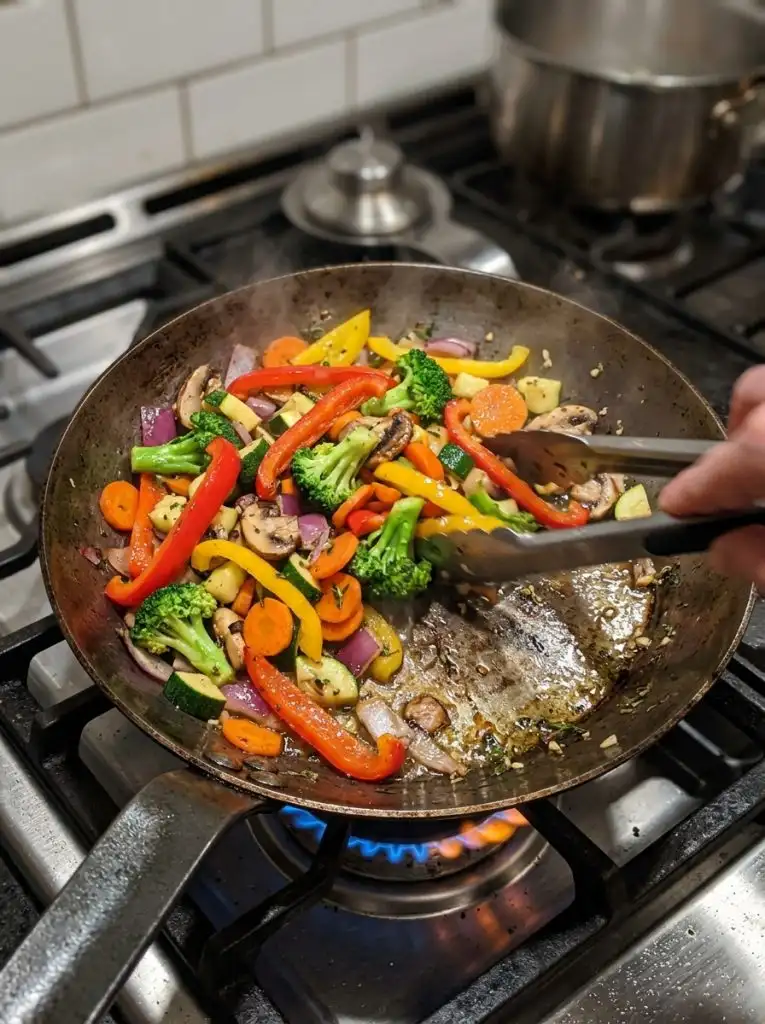
Step 3: Cook Vegetables Separately
Sauté each vegetable one at a time in a lightly oiled pan until just tender.
It takes a little longer, but the texture stays clean and not soggy.
Step 4: Make the Sauce
In a small bowl, mix soy sauce, sugar, sesame oil, garlic, vinegar, and pepper until combined.
Taste it—it should be slightly strong on its own.
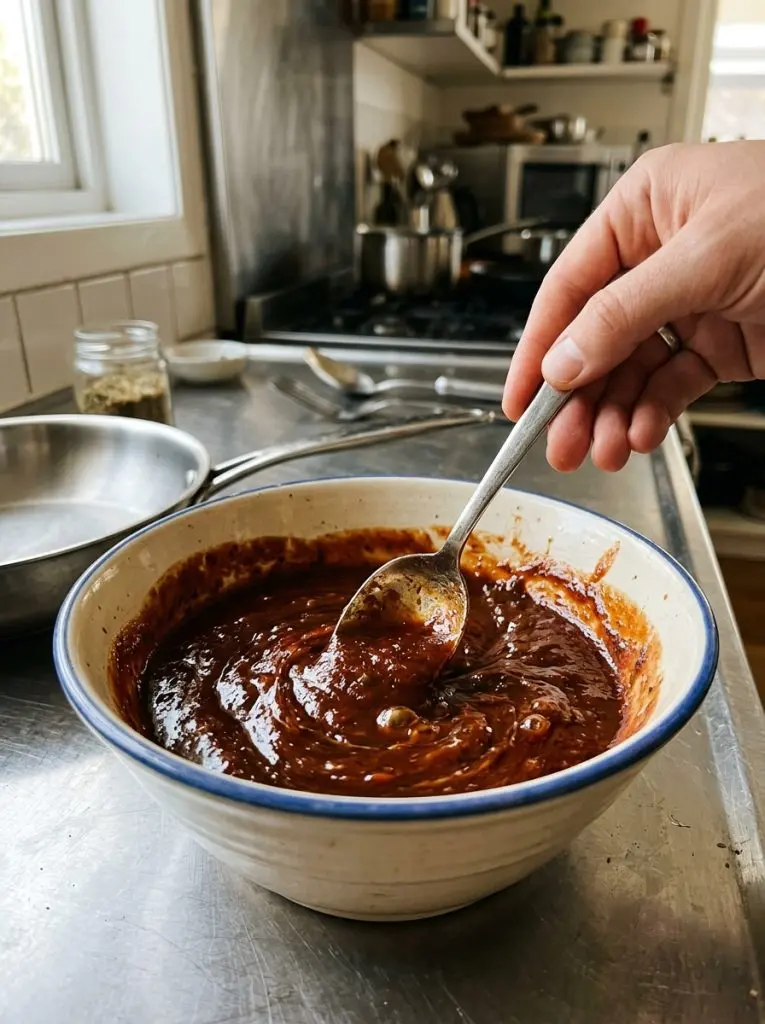
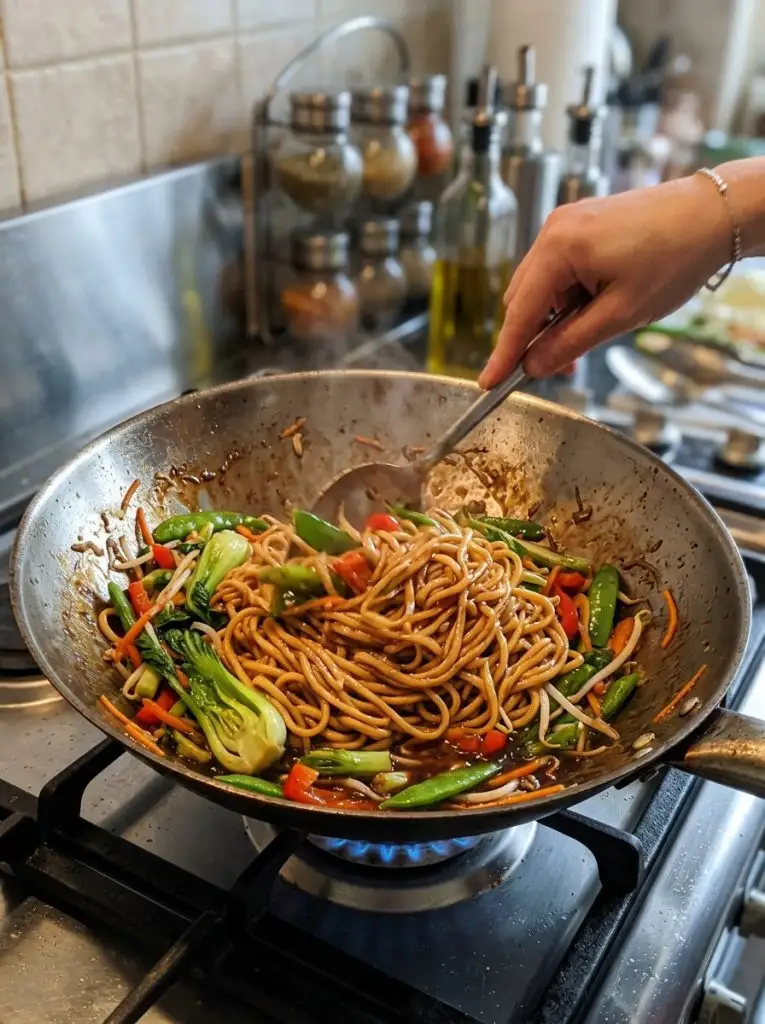
Step 5: Combine Everything
Add noodles and cooked vegetables into a large pan or bowl. Pour in the sauce and toss until everything looks glossy and evenly coated.
I’ve messed this up before by not mixing enough—don’t rush this part.
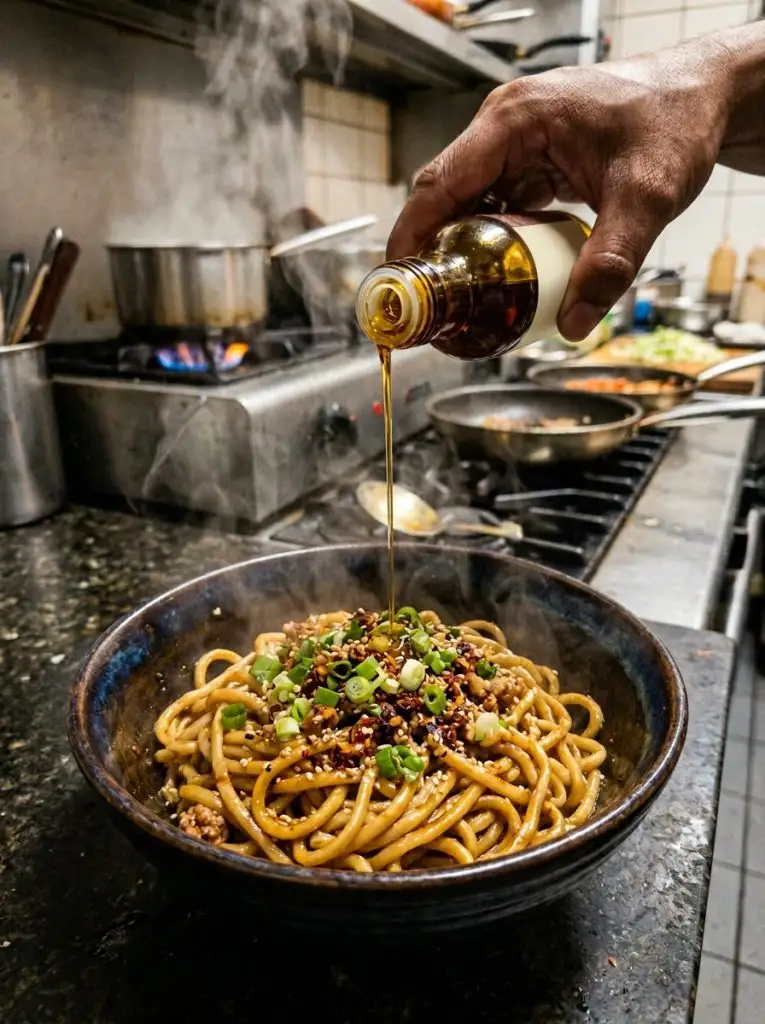
Step 6: Finish with Sesame Oil
Turn off the heat and drizzle a little extra sesame oil at the end.
This is what gives that signature Japchae aroma.
Step 7: Garnish and Serve
Top with sesame seeds, green onions, and egg strips if using.
Serve warm or even at room temperature.
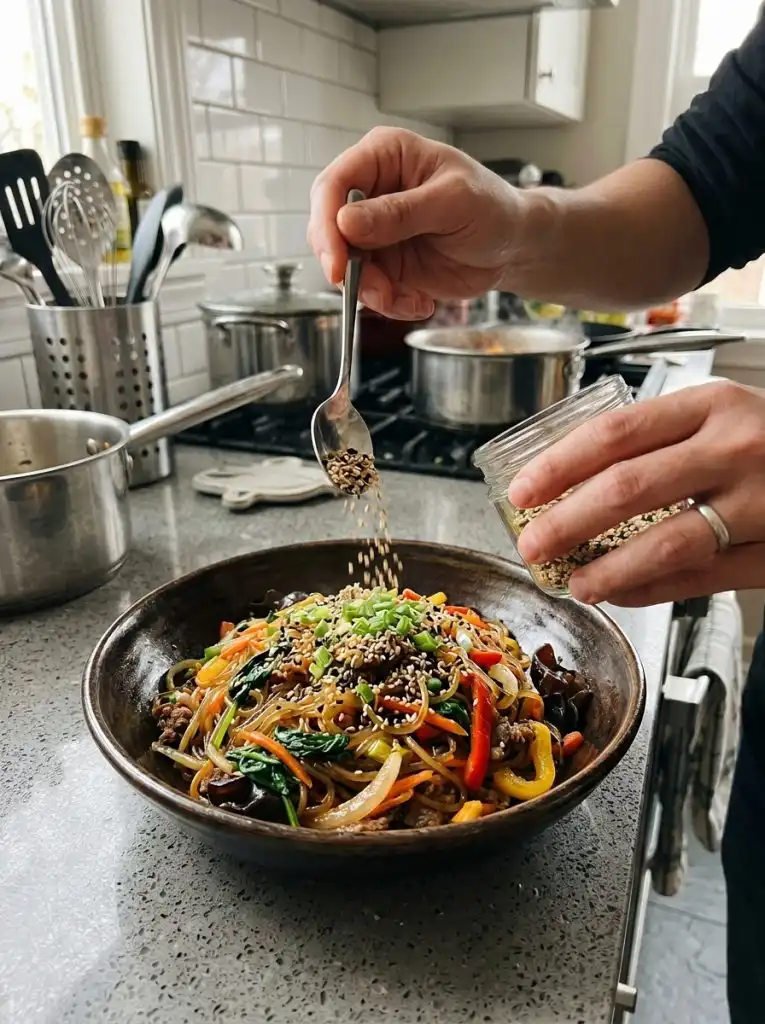
Final Dish Presentation
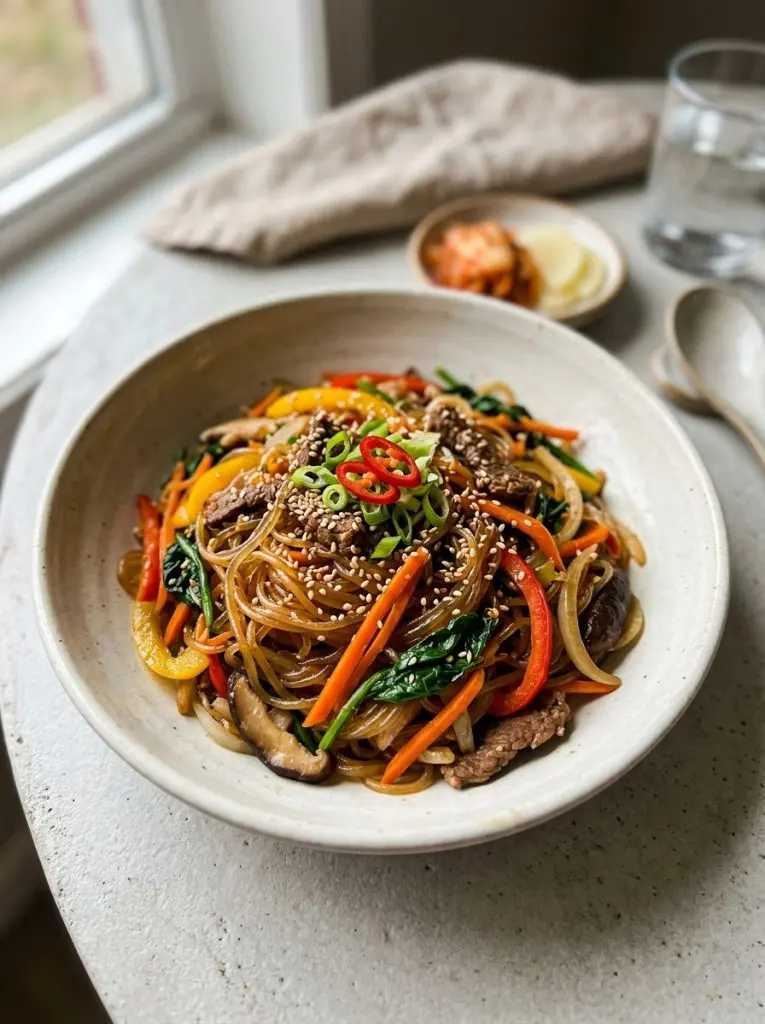
I like to plate Japchae in a wide bowl so all the colors show—those glossy noodles mixed with bright vegetables just look so good together. Sometimes I add extra sesame seeds on top because I like that slight crunch.
Occasions to Serve
This works great as a light dinner, meal prep lunch, or even as a side dish for a bigger Korean-style spread. I’ve also served it at gatherings, and it disappears faster than expected.
Cooking Tips
- Don’t overcook the noodles—they should stay chewy
- Cook veggies separately for better texture
- Taste the sauce before mixing
- Add sesame oil at the end, not during cooking
Variations
- Add beef, chicken, or shrimp for extra protein
- Use tofu or mushrooms for a vegetarian version
- Toss in zucchini, cabbage, or snap peas
- Add a little chili paste if you want heat
Serving Suggestions
- Pair with grilled meats like bulgogi
- Serve with kimchi or cucumber salad
- Add a fried egg on top for a simple meal
Storage Tips
Store in an airtight container in the fridge for up to 4 days.
Reheat gently with a splash of water to loosen the noodles.
You can freeze it, but the texture softens a bit after thawing.
Closing Note
I keep coming back to this recipe because it hits that perfect balance of comfort and freshness. Once you get the noodle texture right, the rest falls into place pretty easily—and it’s one of those dishes that always feels a little special.




A beautifully prepared dish that highlights fresh ingredients. The chewy noodles and savory notes make it memorable