Skillet Chicken and Mushroom Wine Sauce
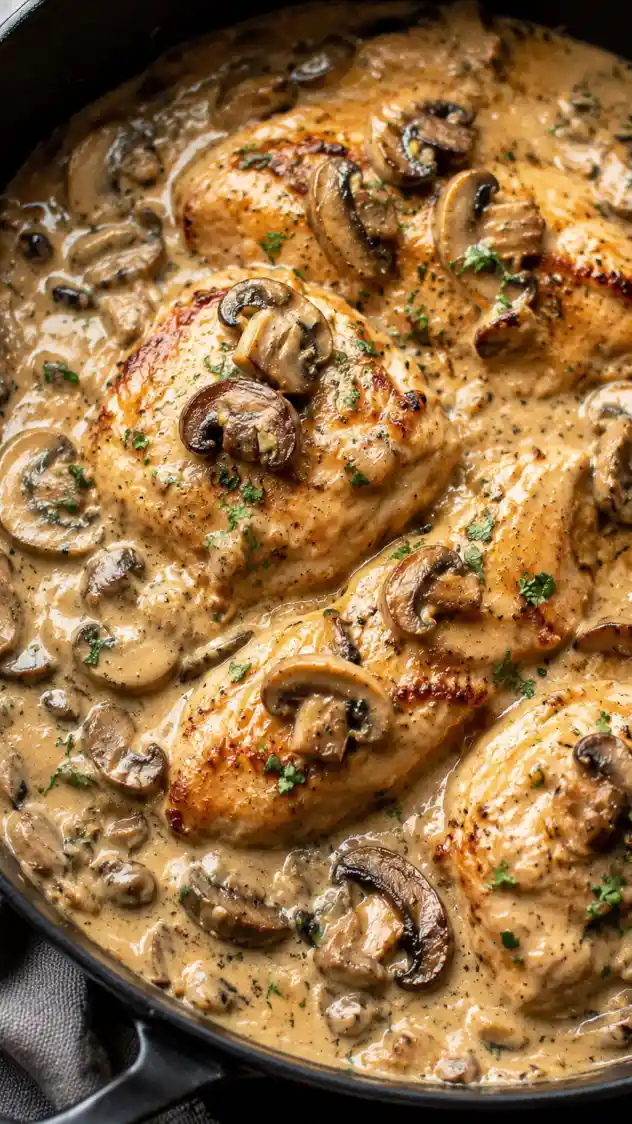
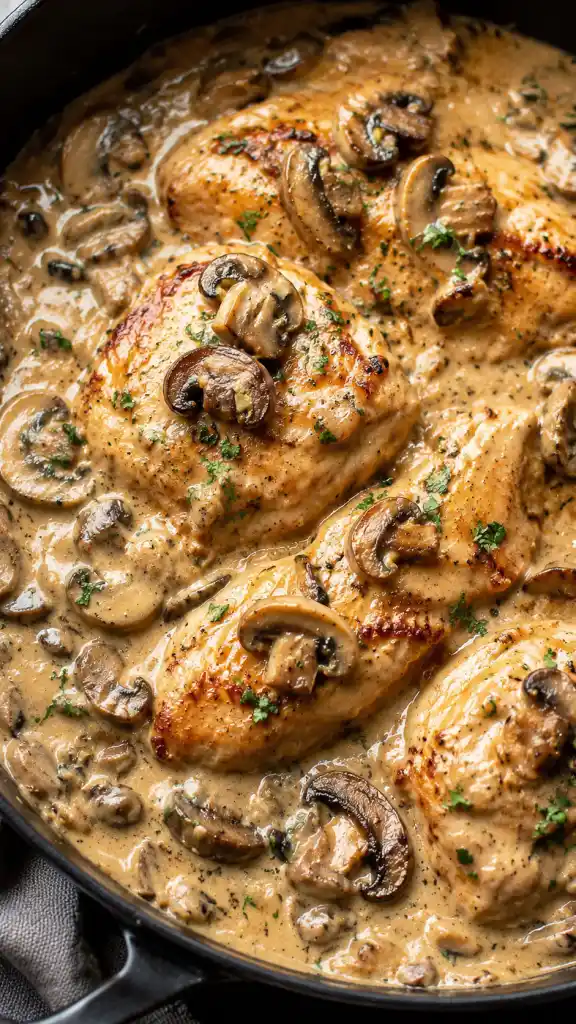
Creamy, rich, and packed with savory flavor, this Skillet Chicken and Mushroom Wine Sauce is the kind of restaurant-quality meal you can easily make at home. Tender pan-seared chicken cutlets are nestled in a velvety white wine cream sauce with deeply caramelized mushrooms, shallots, garlic, and fresh thyme. Best of all, everything comes together in one skillet for easy cleanup and maximum flavor.
Whether served over mashed potatoes, buttered noodles, or fluffy rice, this elegant chicken dinner is perfect for weeknights yet impressive enough for guests.
Why You’ll Love This Recipe
- One-pan meal with easy cleanup
- Tender, juicy chicken with a golden crust
- Rich mushroom cream sauce infused with white wine and thyme
- Restaurant-quality flavor using simple ingredients
- Perfect for serving with pasta, rice, or potatoes
Ingredients
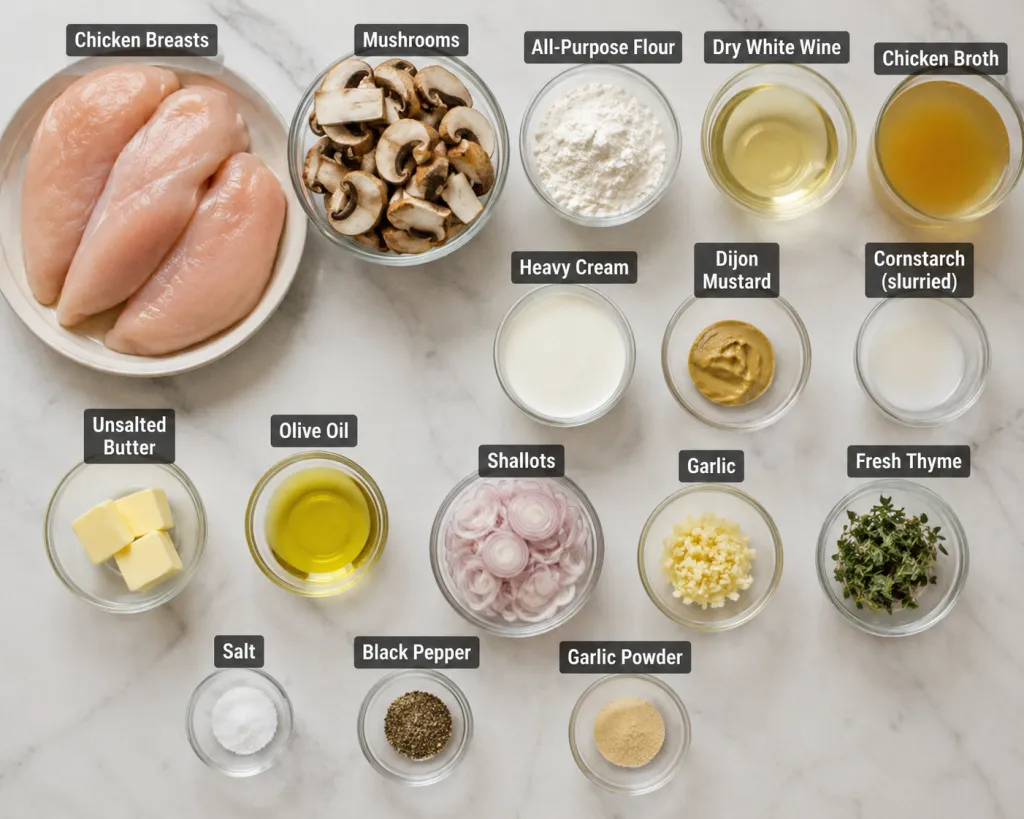
For the Chicken
- 3 boneless skinless chicken breasts (5–6 oz each), cut horizontally into cutlets
- ½ cup all-purpose flour (66g)
- ½ teaspoon salt
- 1 teaspoon black pepper
- ½ teaspoon garlic powder
For the Mushroom Wine Sauce
- 12 ounces mushrooms, cleaned and thickly sliced
- 4 tablespoons unsalted butter, divided
- 1 tablespoon olive oil
- 2 garlic cloves, minced
- 2 large shallots, thinly sliced
- ½ cup dry white wine
- 1½ cups low-sodium chicken broth
- ½ cup heavy cream
- 2 large sprigs fresh thyme
- 1 teaspoon Dijon mustard
- 2 teaspoons cornstarch dissolved in 2 tablespoons water or broth
For Serving
- Fresh parsley or additional thyme for garnish
- Rice, mashed potatoes, or noodles
Helpful Ingredient Notes
Chicken Breasts: Thin cutlets cook faster and more evenly while staying juicy. For easier slicing, place the chicken in the freezer for about 15 minutes before cutting.
Mushrooms: Cremini or baby bella mushrooms provide the deepest flavor, though white button mushrooms work well too.
White Wine: A dry white wine such as Chardonnay adds acidity and depth to the sauce. If preferred, substitute with white grape juice or additional chicken broth.
Dijon Mustard: Don’t skip it—this small amount adds subtle complexity and helps balance the richness of the cream.
How to Make Skillet Chicken and Mushroom Wine Sauce
Step 1: Prepare the Chicken
Pat the chicken breasts dry with paper towels. Slice each breast horizontally into two thinner cutlets. Alternatively, place the chicken between plastic wrap and pound to an even thickness for uniform cooking.
In a shallow bowl, combine the flour, salt, pepper, and garlic powder.
Step 2: Sear the Chicken
Heat 2 tablespoons butter and the olive oil in a large skillet over medium heat until melted.
Dredge the chicken cutlets in the flour mixture, coating both sides and shaking off any excess flour. Working in batches, cook the chicken for about 5 minutes on the first side and 3–5 minutes on the second side until beautifully golden brown.
Transfer the cooked chicken to a plate and cover loosely to keep warm.
Chef’s Tip: Avoid overcrowding the pan. Crowding traps steam and prevents proper browning.
Step 3: Brown the Mushrooms
Add the remaining 2 tablespoons butter to the skillet.
Spread the mushrooms in a single layer and let them cook undisturbed until deeply browned on one side. Stir and continue cooking until they release their moisture and the liquid fully evaporates.
Why This Matters: Proper browning develops rich umami flavor. Mushrooms that are rushed or stirred too often can become soft instead of caramelized.
Step 4: Build the Sauce
Add the sliced shallots and cook until softened and lightly browned. Stir in the minced garlic and sauté for about 30 seconds, just until fragrant.
Pour in the white wine and scrape up all the browned bits from the bottom of the skillet. Those flavorful bits, known as fond, are key to creating a deeply savory sauce.
Add the thyme sprigs, chicken broth, Dijon mustard, and heavy cream. Bring the mixture to a gentle boil and cook for 5 minutes.
Step 5: Finish the Dish
Stir in the cornstarch slurry and bring the sauce back to a light simmer until slightly thickened.
Return the chicken and any accumulated juices to the skillet. Simmer for about 5 minutes, allowing the chicken to warm through and absorb the flavors of the sauce.
Remove the thyme sprigs and season with additional salt and pepper to taste.
Garnish with fresh parsley or thyme before serving.
Chef’s Tips for Success
- Pat the chicken dry before dredging to help achieve a better crust.
- Allow mushrooms to brown undisturbed for maximum flavor.
- Use low-sodium broth so you can control the seasoning.
- Let the sauce simmer gently rather than boil vigorously to prevent the cream from separating.
- Return any juices from the resting chicken to the pan—they add extra flavor.
Serving Suggestions
This creamy mushroom wine sauce pairs beautifully with:
- Creamy mashed potatoes
- Buttered egg noodles
- Steamed white rice
- Roasted vegetables
- Crusty bread for soaking up the sauce
Storage and Reheating
Store leftovers in an airtight container in the refrigerator for up to 3 days.
Reheat gently over low heat on the stovetop, adding a splash of chicken broth or cream if needed to loosen the sauce.
Frequently Asked Questions
Can I make this without wine?
Yes. Substitute the wine with white grape juice or additional chicken broth.
What mushrooms work best?
Cremini mushrooms offer the richest flavor, but white button mushrooms are also excellent.
Can I make extra sauce?
Absolutely. Double the sauce ingredients beginning with the butter, mushrooms, shallots, garlic, wine, thyme, broth, mustard, and cream for extra gravy.
Is this recipe freezer-friendly?
Cream-based sauces can sometimes separate after freezing, so this dish is best enjoyed fresh or refrigerated for short-term storage.
You will Love! Tuscan Butter Beans with Spinach and Sun-Dried Tomatoes
Nutrition Information
Per serving (estimated):
- Calories: 309 kcal
- Protein: 17g
- Carbohydrates: 14g
- Fat: 19g
- Saturated Fat: 10g
- Cholesterol: 83mg
- Sodium: 301mg
- Potassium: 508mg
- Fiber: 1g
- Sugar: 2g
Nutrition values are estimates and may vary depending on ingredient brands and substitutions.